
DISCOUNTED EDUCATION PRICING! CALL 1-877-891-8411. We Gladly Accept School Purchase Orders!
By: Dr. Elena Ramirez, EdTech Specialist & Former District STEM Coordinator
Published: November 13, 2025
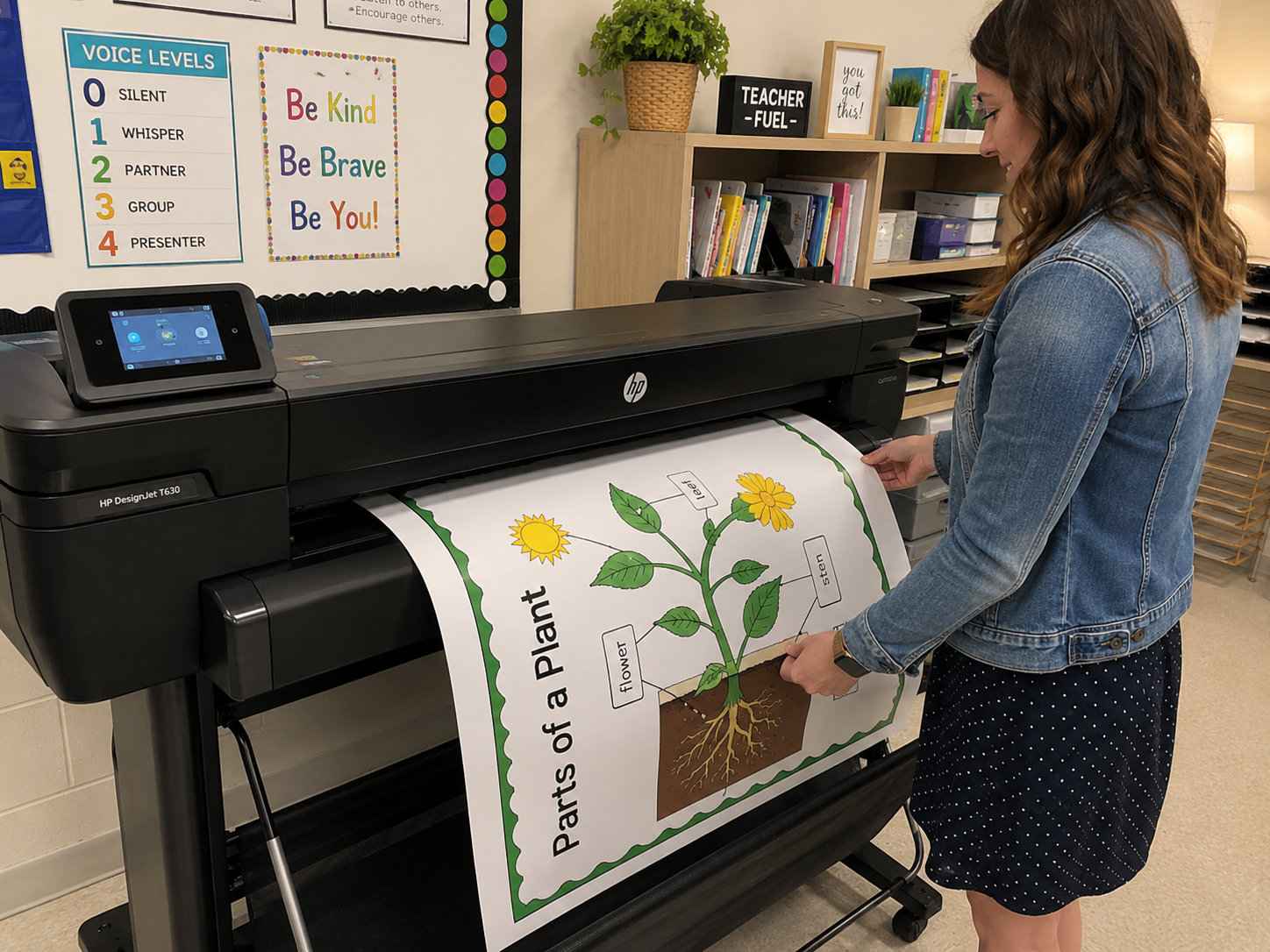
Walk into any school hallway and you’ll find them—vibrant science fair displays, literacy walls, and motivational posters proudly taped to cinderblock. Yet, after a few months, many of these prints begin to fade, yellow, or lose their sharpness. The culprit isn’t just sunlight or air—it’s often the ink itself.
Understanding how poster printer ink affects durability is more than a technical detail; it’s a budget and visual impact issue for schools. Choosing the right ink type—paired with proper lamination and storage—can mean the difference between posters that look stunning all year and ones that fade before the semester ends.
In this guide, we’ll explore the factors that make ink last: pigment density, UV resistance, paper compatibility, and protective coatings. Whether you’re a teacher, tech director, or facilities manager, this knowledge helps you get the most from your school’s printing investment.
Quick Takeaway: Pigment-based poster printer inks resist fading better than dye-based inks because their color particles sit on the surface of paper and resist UV breakdown. Combine them with UV-protected laminate for posters that last 5x longer.
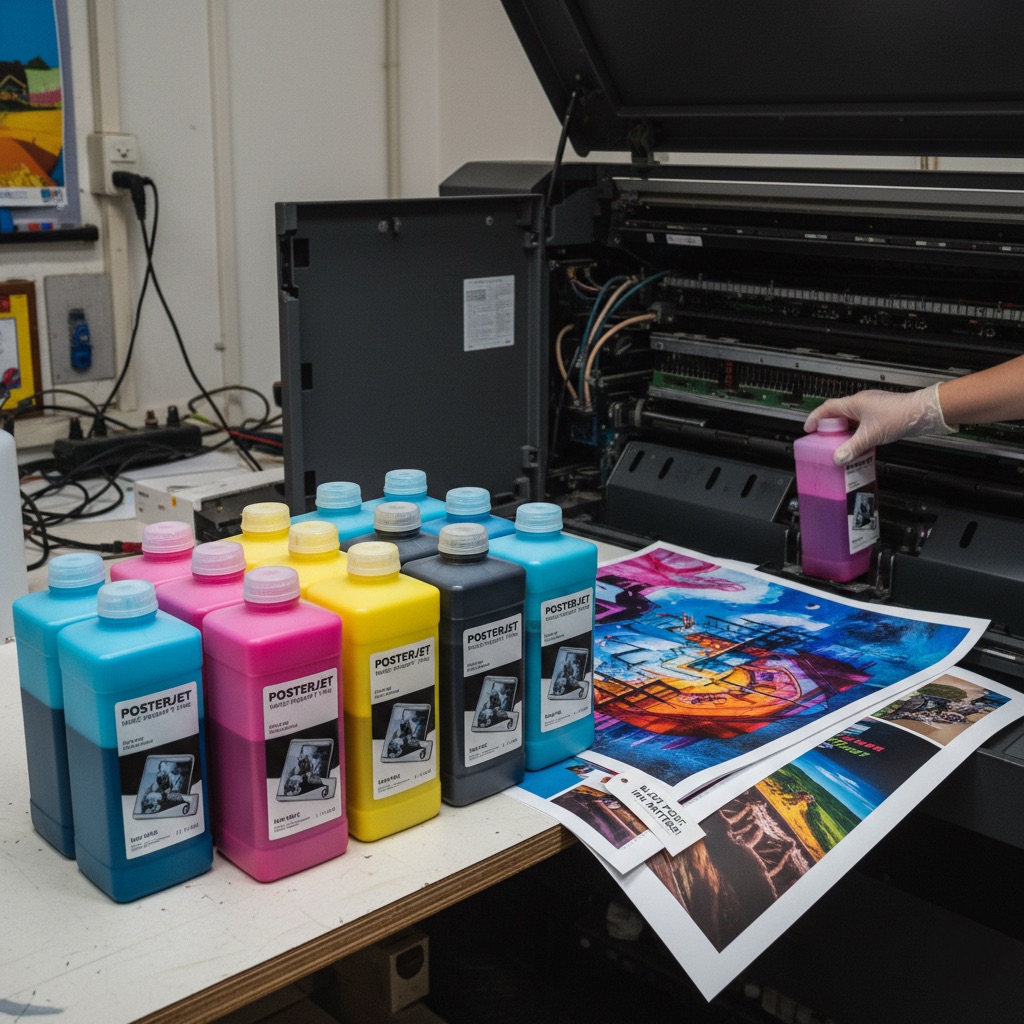
Every poster printer ink is made from two main components: a colorant and a liquid carrier. The colorant can be either dye or pigment, and this choice dramatically changes how long your prints last.
If your posters will be displayed in sunlit areas or high-traffic hallways, pigment-based inks are the smart choice. They’re the standard for archival prints, museum displays, and—importantly—educational poster makers that are expected to last all school year.
Did you know? Pigment poster printer inks can last over 100 years indoors without noticeable fading, according to testing by Wilhelm Imaging Research.
Ultraviolet (UV) light is one of the biggest enemies of printed color. When posters are placed near windows, skylights, or even under fluorescent lighting, UV rays break down ink molecules over time.
Each color in your print absorbs light differently. Overexposure leads to uneven fading—reds might dull faster than blues, and skin tones can shift toward yellow. For educational visuals or branded school materials, that color distortion can undermine the message.
When combined, these three strategies dramatically extend poster life, especially in classrooms with bright ambient light.
Pro Tip: Pair UV-stable paper with pigment ink and cold lamination for posters that maintain full color for 2–3 years, even in sunlit areas.
Even the best poster printer ink fades faster on the wrong paper. The chemistry between ink and substrate determines how well color particles bond and how resistant they’ll be to wear.
For schools, a thick, coated satin paper often provides the best balance between quality, durability, and cost. It holds pigment poster printer ink securely while offering a professional finish.
Pro Tip: Always check your poster printer’s media compatibility list—using paper designed for pigment ink printing ensures sharper images and longer life.
Even if your poster maker ink is fade-resistant, posters still face daily threats—fingerprints, humidity, scuffing, and cleaning sprays. That’s where cold lamination comes in.
Cold laminators use pressure-sensitive adhesive rather than heat, making them safe for classroom environments and delicate prints.
They:
When combined with high-quality pigment ink, cold lamination can extend the lifespan of a poster from 6 months to over 3 years—especially in high-traffic areas like hallways, cafeterias, or libraries.
In Short: Cold lamination doesn’t just make posters shiny—it acts as a UV shield, moisture barrier, and surface protector all in one.
Even with durable ink and lamination, the environment still plays a major role in poster longevity.
School facilities teams can help posters last longer simply by monitoring display environments and rotating them seasonally.
Maintenance Tip: Rotate hallway posters every 4–6 months to reduce light and environmental exposure. Store them flat in a dry, dark space when not displayed.
Poster printer ink longevity isn’t just about chemistry—it’s about consistency. Regular printer maintenance ensures even color application and prevents clogging, which can lead to faded or inconsistent prints.
For schools using wide-format systems, these small habits save money and preserve visual quality over hundreds of prints.
Save Time & Ink: A five-minute printhead cleaning once a week can double the lifespan of your poster maker for schools and improve ink efficiency by 20%.
While no two environments are identical, here’s a realistic timeline based on ink and protection level:
| Ink Type | Display Conditions | With Lamination | Expected Longevity |
|---|---|---|---|
| Dye-Based | Indoor, indirect light | No | 3–6 months |
| Dye-Based | Indoor, indirect light | Yes | 9–12 months |
| Pigment-Based | Indoor, indirect light | No | 1–2 years |
| Pigment-Based | Indoor, indirect light | Yes | 2–4 years |
| Pigment-Based + UV Laminate | High light exposure | Yes | 3–5 years |
For schools displaying recurring content (like STEM fair visuals or motivational boards), investing in pigment ink and UV lamination is a clear win for both quality and cost per year.
Cost Insight: A laminated pigment-ink poster may cost slightly more upfront but delivers up to 5x the lifespan—saving time and materials long term.
Posters are more than decoration—they’re visual teaching tools. From growth mindset charts to step-by-step math guides, these materials are viewed by hundreds of students every day. When colors fade or edges curl, the message weakens.
Durable prints reinforce the school’s professional image and reduce the need for constant reprinting. Facilities and technology departments that standardize on fade-resistant inks and protective finishes can save thousands in consumable costs each year—while keeping learning spaces bright and inspiring.
Poster printer ink durability is chemistry meets strategy. When schools understand how pigment density, UV protection, and lamination work together, they can produce posters that stay vibrant semester after semester.
By pairing pigment-based, fade-resistant inks with UV-protected media and cold lamination, you create visuals that endure. Not just for cost savings—but because your students deserve learning environments that look as fresh in May as they did in September.