
DISCOUNTED EDUCATION PRICING! CALL 1-877-891-8411. We Gladly Accept School Purchase Orders!

The night everything changed for me started with a closed sign on the door of a print shop. I had driven across town with a USB stick full of workshop materials that needed to be turned into posters by the next morning. They had been open when I left home; they were closed by the time I arrived.
That moment wasn’t dramatic—no deadline explosion or angry phone calls—but it was deeply frustrating in a quiet, revealing way. I realized my entire workflow depended on someone else’s hours, someone else’s calibration, someone else’s idea of “good enough.”
I drove home thinking: Why am I still outsourcing something that shapes so much of what I do?
That night became the catalyst for a decision that changed how I create and communicate: I bought a poster maker printer.
What follows isn’t a comparison chart or a buyer’s guide. It’s the story of how taking control of my own printing reshaped my creativity, my workflow, and even my understanding of what visual communication can be.
Before the poster making machine arrived, I believed my frustration came from delays, closing times, or the occasional color mismatch. But in the weeks leading up to that 9 p.m. mishap, something else had been quietly annoying me.
Whenever I designed something—a workshop diagram, an event poster, a classroom visual—I was thinking in terms of limitations.
I would catch myself asking:
I wasn’t designing boldly.
I was designing cautiously.
That was the deeper issue.
The need for control wasn’t about cutting costs. It wasn’t about convenience. It was about removing the governor on my creative decisions. And that became clear only after the printer arrived.
The delivery driver helped me angle the giant box through the doorway, and for a moment I wondered whether this was one of those overly ambitious purchases people laugh about years later.
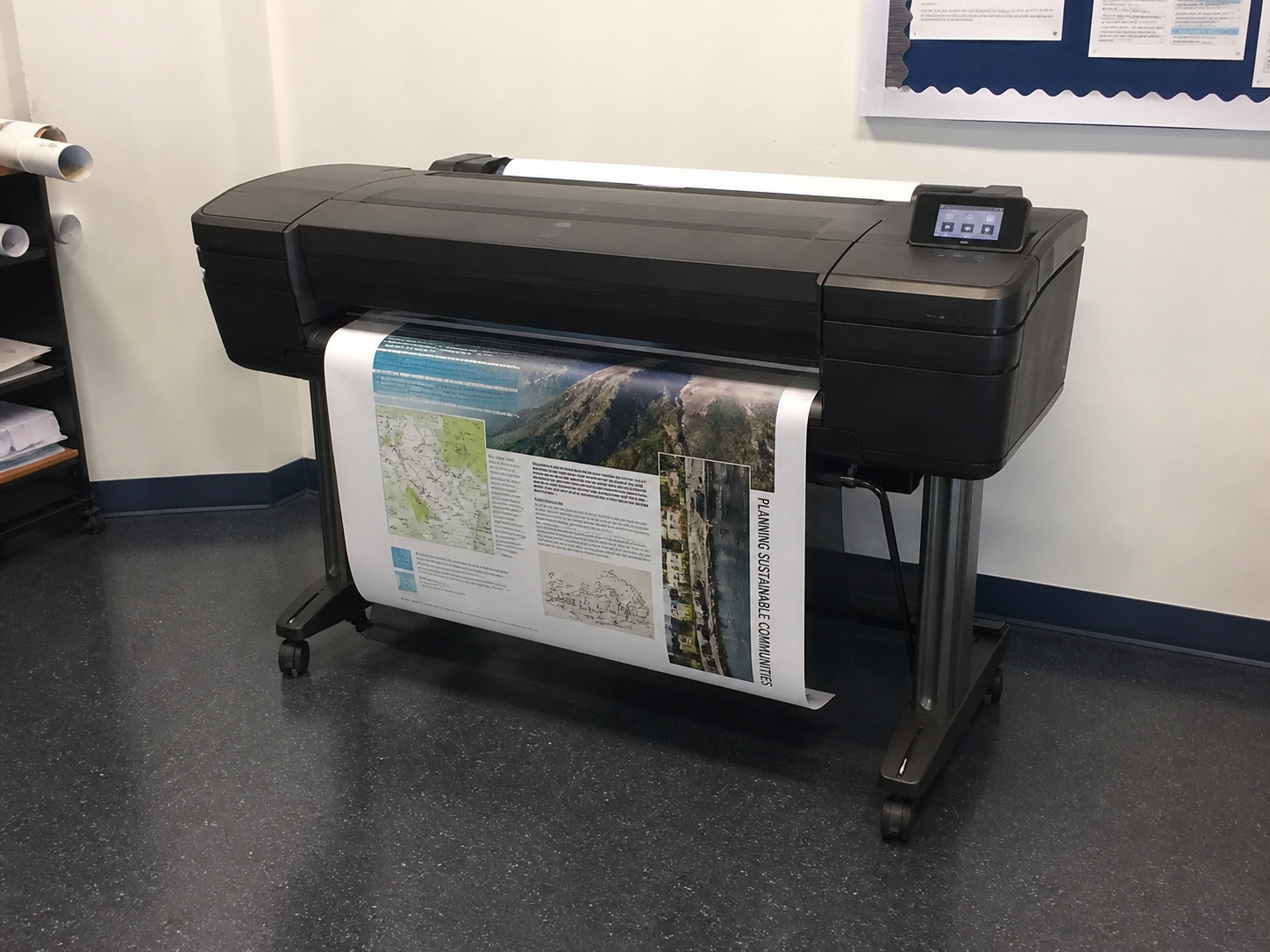
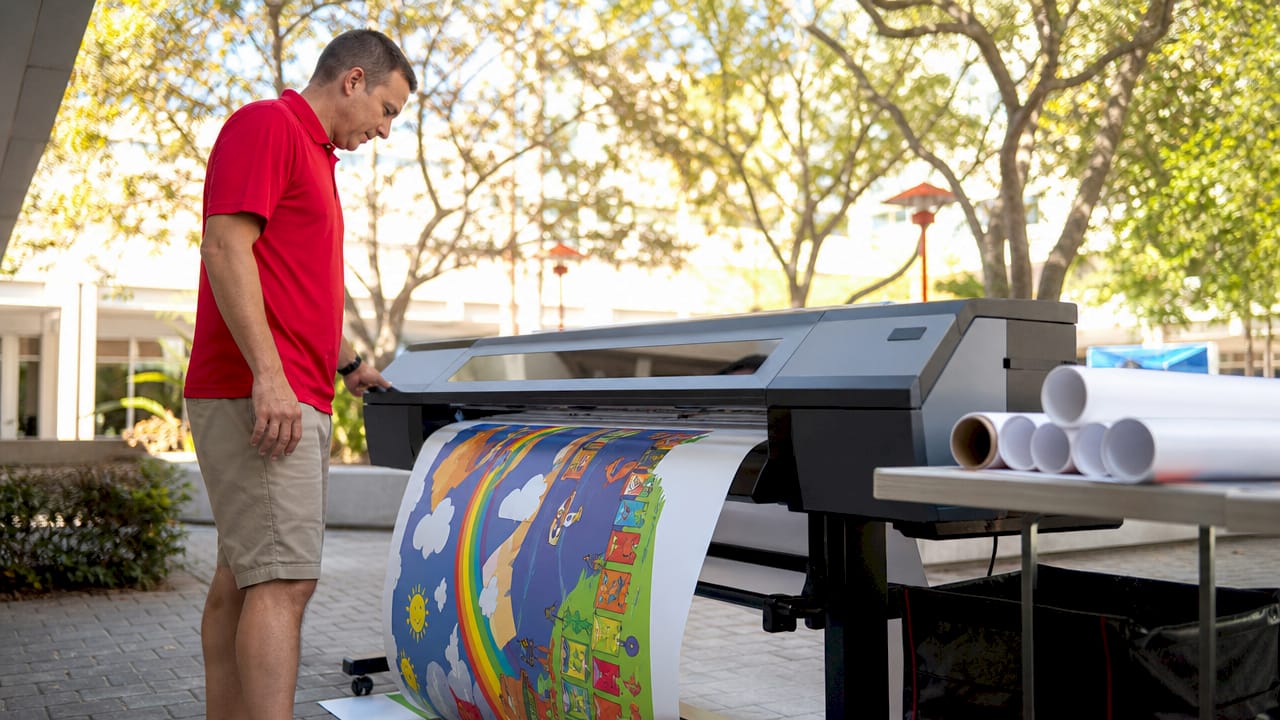
But when I unpacked it, something shifted. It felt less like buying a machine and more like opening a new creative chapter. The setup was surprisingly gentle—calibration steps were clear, the interface intuitive, and the first startup hum oddly satisfying.
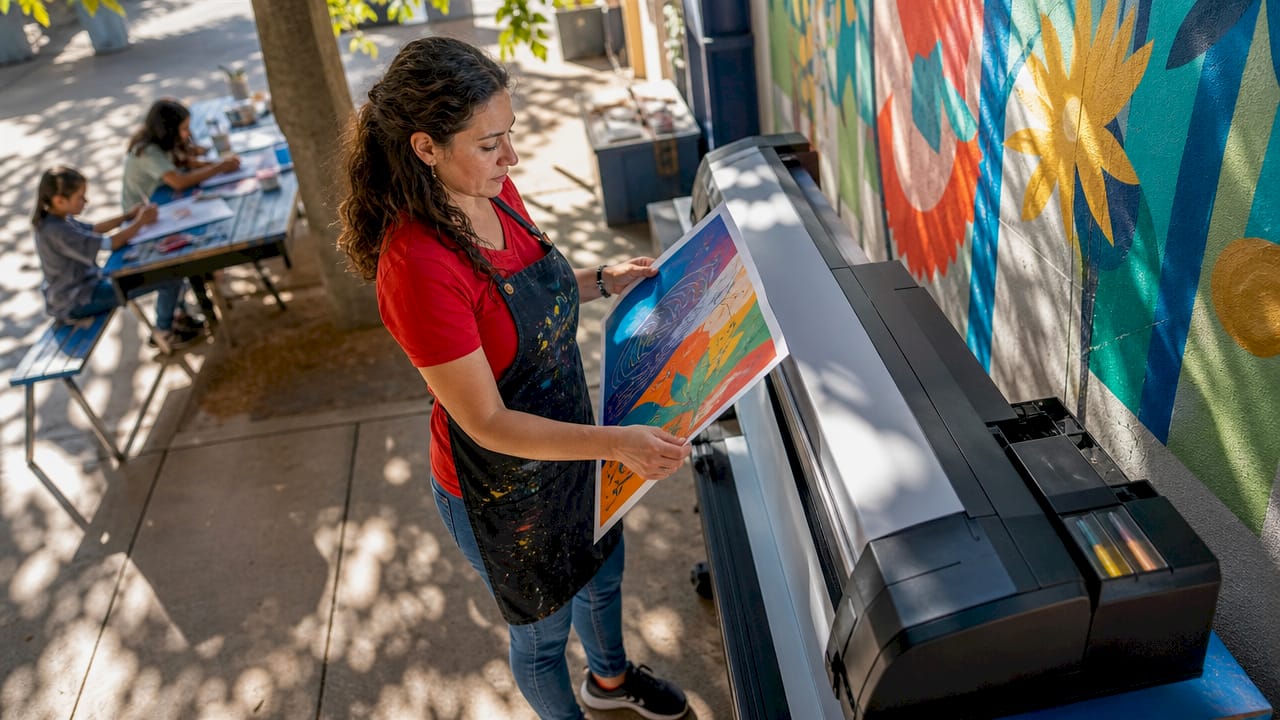
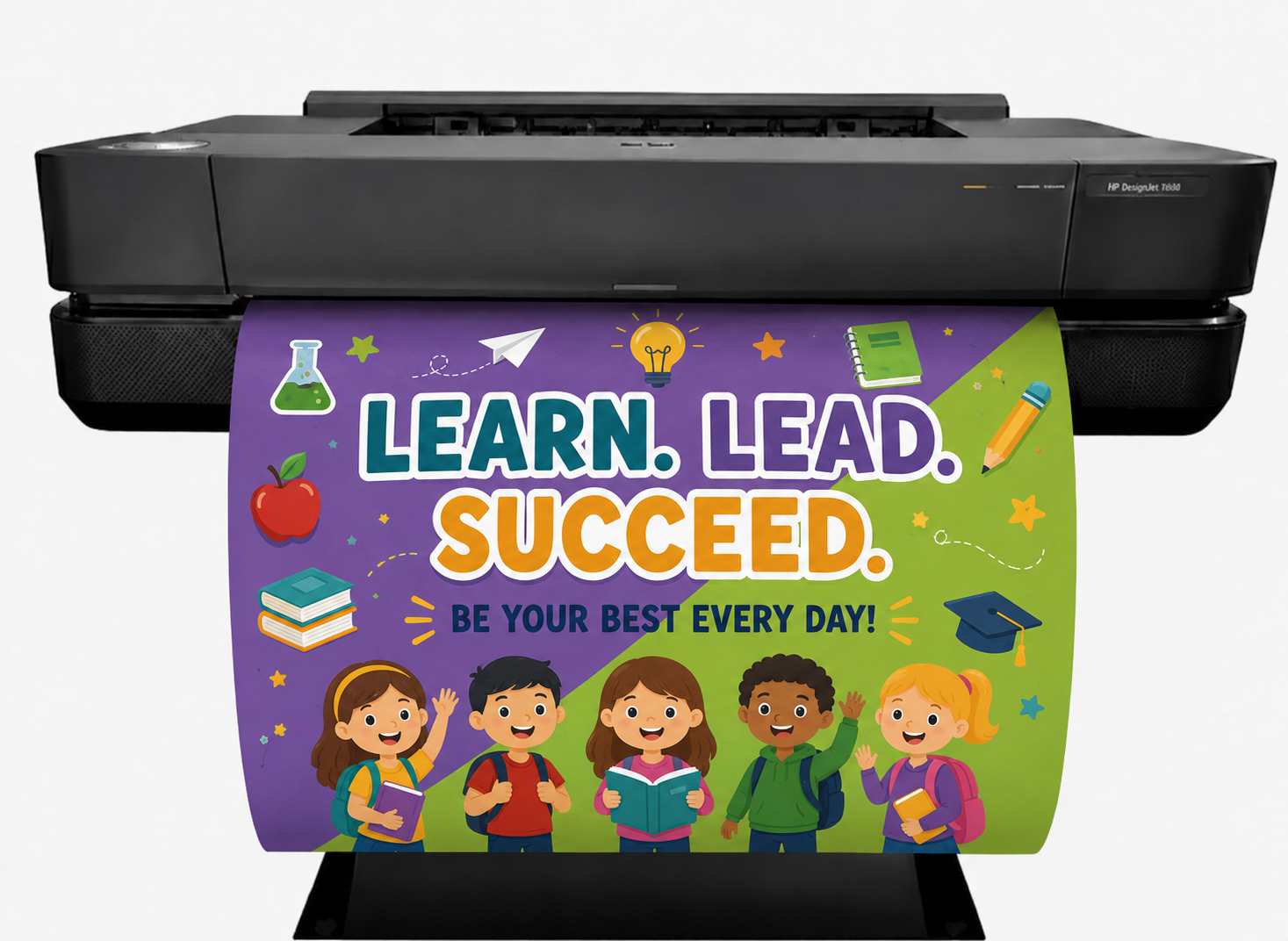
I had prepared a motivational poster I wanted to test: a simple message for an upcoming class session. When the print began, it felt like watching a photograph develop in a darkroom, slow but full of promise. The colors were slightly off—my fault, not the printer’s—but the effect of seeing my idea emerge in full scale, right in front of me, was electrifying.
I didn’t expect the emotional part.
The sense of capability.
The quiet thrill of self-reliance.
That first print wasn’t perfect.
But it was proof that I had gained something powerful: control.
Over the next few months, my relationship with printing changed in ways I didn’t anticipate.
Before, every pixel felt expensive. Every revision carried weight. Now, I experimented more freely, knowing I could print without hesitation. It was like someone had lifted a creative tax I had been paying for years.
Print shops rarely give you the chance to feel the difference between matte and glossy or heavyweight and satin. But when you have the materials at arm’s reach, you start understanding the emotional tone each one carries.
Matte feels calm, thoughtful, grounded.
Glossy is bold, energetic, high-impact.
Heavyweight paper feels important.
Adhesive-backed sheets invite interaction.
These aren’t technical differences—they’re psychological ones.
Digital designs live in a frictionless world. Once printed, they become real. There is something grounding—even humbling—about holding a piece of your own work.
That shift in physical presence changed not just my workflow but my mindset. It made the act of creating feel whole.
When I bought the poster printer, I assumed it would mainly help with my workshops and conferences. I was wrong. The printer became something of a community tool.
In truth, the more I printed, the more I realized visual communication is everywhere.
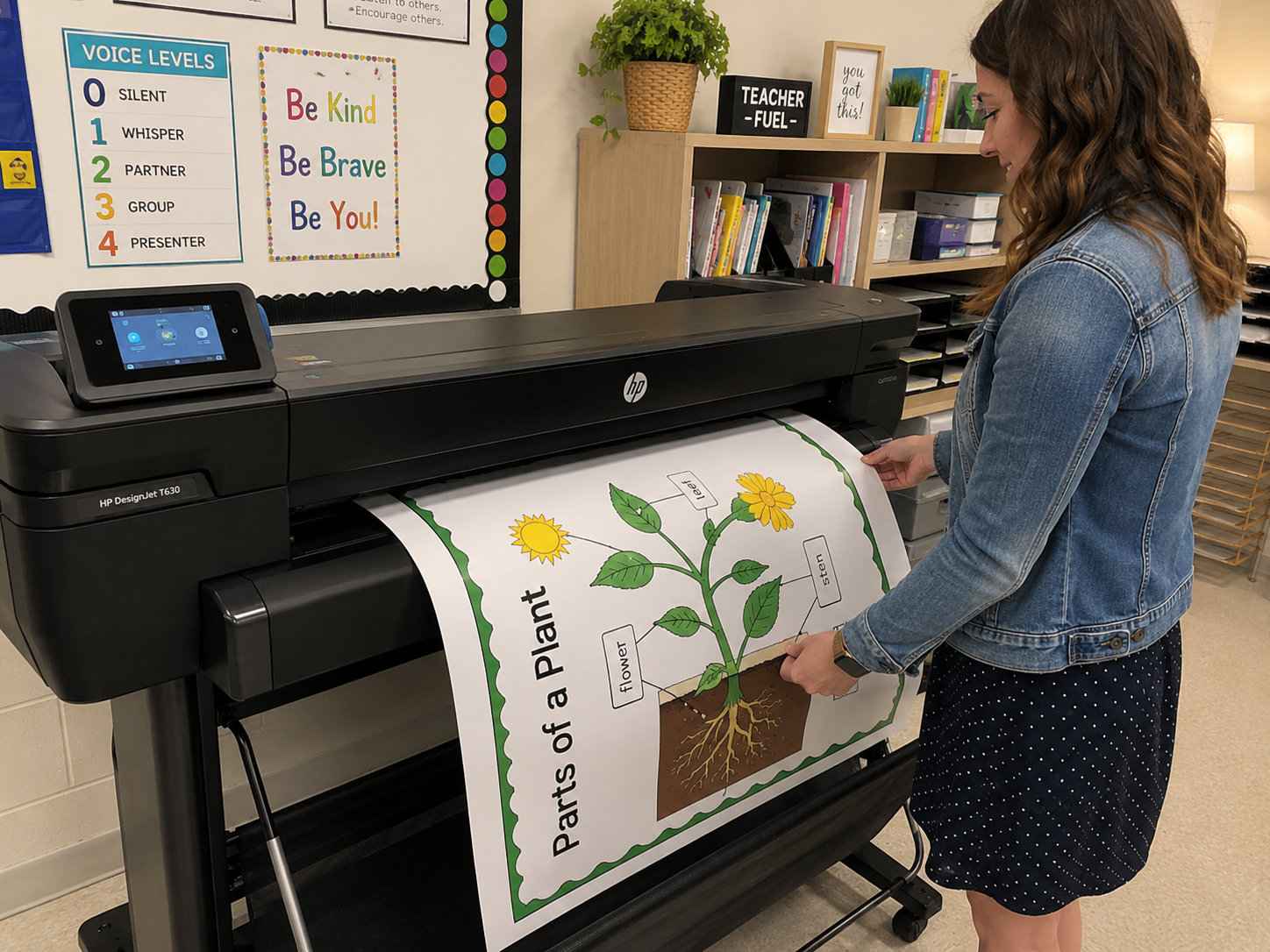
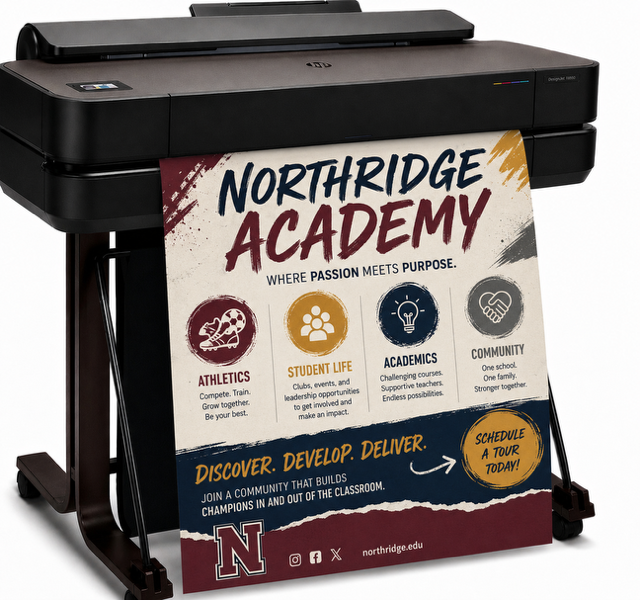
One day a café owner asked if I knew anyone who could help with seasonal signage. I printed a sample. She was stunned at how fast the turnaround was. That same month, a teacher I know asked for anchor charts for her classroom. A few weeks later, I helped a nonprofit create posters for a fundraising event.
Each time, something interesting happened: people reacted not just to the posters but to the fact that they could be created right there. It made the visuals feel more personal, more responsive, more human.
And it reminded me of something I had forgotten—posters are not just decorations. They are signposts for ideas.
For the first few months, I tracked everything—ink consumption, paper usage, real cost per print. Like most people, I wanted to know whether the investment made financial sense.
But the financial conversation quickly became secondary to a more significant realization.
The real value wasn’t in the savings.
It was in the reduction of friction.
Friction is what kills creativity.
Friction is what makes us choose “good enough” over “let me try one more idea.”
Friction is what makes a deadline feel like a shrinking box.
Owning the printer removed that friction.
It allowed me to revise ideas minutes before a presentation, adjust colors without anxiety, and test variations without feeling guilty. It gave me freedom not just in printing but in thinking.
That, more than any spreadsheet calculation, made the investment worthwhile.
There’s a quiet truth almost no one talks about: the biggest learning curve isn’t technical.
It’s psychological.
You must unlearn years of conditioning from print-shop habits—thinking in terms of limitations, rationing revisions, avoiding bold ideas. You have to remind yourself that experimentation is now a feature, not a cost.
There’s also the learning curve of calibration—understanding how color behaves, how paper absorbs ink, how lighting alters perception. These lessons emerge only through practice, and they deepen your relationship with design itself.
This is why people who buy a poster maker printer often describe the experience as “transformative.” They’re not exaggerating. They’re describing the shift from dependency to creative autonomy.
A poster is a decision to make an idea visible.
Once I owned the printer, I noticed patterns in how people responded to visuals. Students took photos of classroom posters that resonated emotionally. Customers at the café engaged more with signs created on textured stock compared to glossy. Event attendees gravitated toward displays that felt handmade rather than mass-produced.
It made me realize something profound:
When we control the way ideas become physical, we control the experience others have with those ideas.
This is the part that no one puts in spec sheets or product descriptions.
This is the part that made ownership worthwhile for me.
I used to think posters were static, informative, functional.
Now I see them as:
When you print something yourself, your intention stays intact. You control the tone, the texture, the energy.
And that makes every visual project feel more authentic.
After a year of doing this work, I’m convinced that many creators, educators, and small business owners would dramatically improve their workflow and creative output by owning a poster maker printer.
Not because it saves money—though it often does.
Not because it’s faster—though it absolutely is.
But because it removes the distance between idea and expression.
When the moment of inspiration and the moment of manifestation sit only a few feet apart, something changes. You create more. You create boldly. You create without asking permission.
And that alone can transform your work.
I didn’t buy a printer to reinvent my creative process.
But that’s exactly what happened.
Before, I depended on others’ timelines.
Now, I depend on my own momentum.
Before, I designed cautiously.
Now, I design generously.
Before, printing felt like the final step.
Now, it feels like part of the creative conversation.
And if there’s one lesson I’ve learned through all of this, it’s that tools don’t just make work easier—they make possibility bigger.
Owning a poster maker printer didn’t simply give me a machine.
It gave me permission to explore.
And if you create regularly—whether for classrooms, events, businesses, or your own artistic journey—this might be the permission you’ve been waiting for, too.