
DISCOUNTED EDUCATION PRICING! CALL 1-877-891-8411. We Gladly Accept School Purchase Orders!
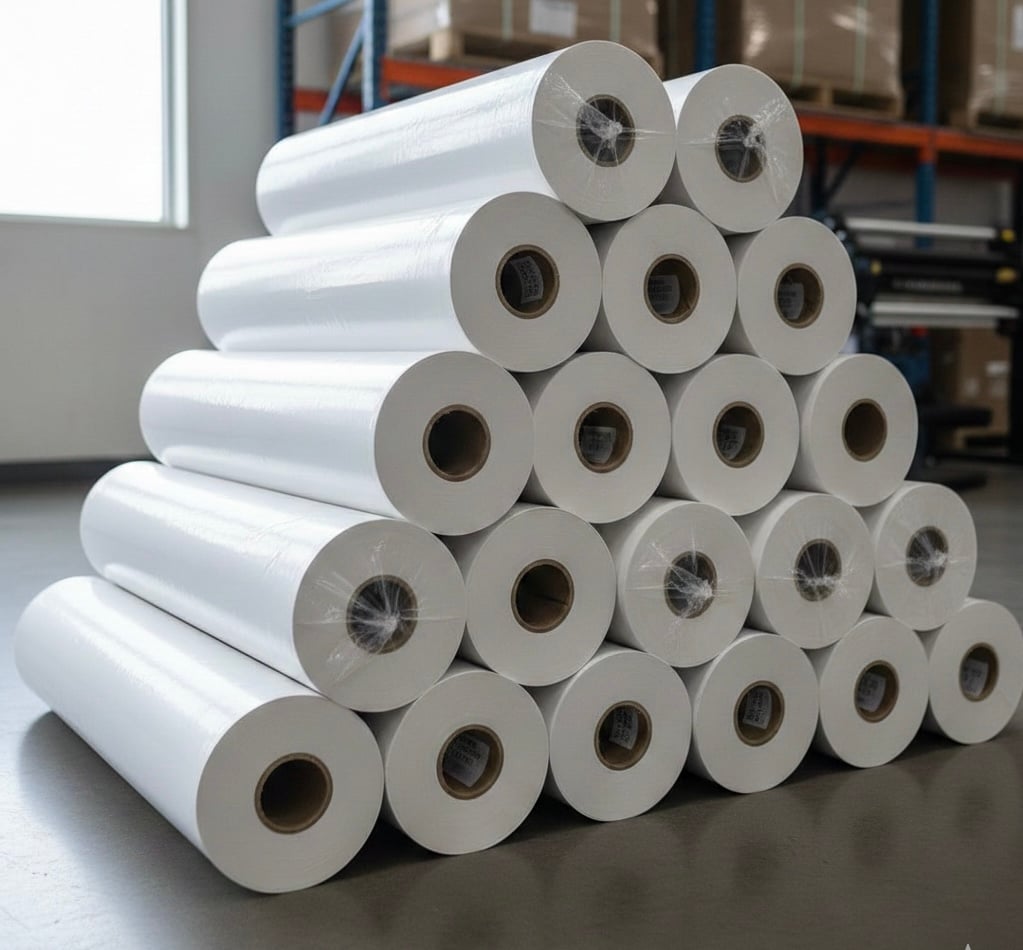
When people search for poster paper, they usually assume it’s just a thicker version of regular paper. In reality, poster paper is a specialty printing material designed for visual impact, durability, and readability—especially in educational environments.
The quality of poster paper directly affects how long a poster lasts, how clearly it communicates information, and how well it performs inside a poster printer machine. For schools that print posters daily, choosing the right poster paper is not optional—it’s foundational.
Poster paper is a coated, wide-format printing paper engineered to produce high-color, glare-free visuals that remain flat and readable when displayed on walls, bulletin boards, and classrooms. Unlike standard office paper, poster paper is designed to handle heavy ink coverage in a poster printer machine without bleeding, curling, or fading.
This definition matters because most printing issues blamed on the printer are actually caused by using the wrong paper.
Educators choose professional poster paper because it delivers vivid color, dries flat, and performs reliably in every poster printer machine
Poster making paper differs from regular paper in five key ways:
Regular office paper is designed for short-term documents. Accordingly, poster paper is designed for long-term visual display. Professional poster paper produces sharp visuals and feeds smoothly through poster printer machines.
| Feature | Poster Paper | Regular Paper |
|---|---|---|
| Ink absorption | High | Low |
| Wall durability | Excellent | Poor |
| Curl resistance | Yes | No |
| Glare | Minimal | Moderate |
| Designed for poster printers | Yes | No |
This difference is why classrooms that rely on visuals quickly abandon office paper for true poster maker paper. Teachers use high-quality poster paper to create clear, durable classroom visuals with their poster printer machines.
Educational posters are not decorative—they are instructional tools. Anchor charts, vocabulary walls, behavior cues, timelines, and STEM visuals all rely on clarity and longevity.
High-quality poster paper improves:
Research consistently shows that strong visual reinforcement improves information retention. When posters fade, curl, or glare, their instructional value drops.
Poster paper does not perform independently—it performs inside a poster printer machine.
Every poster printer interacts with paper based on:
Low-quality poster paper often causes ink bleeding, roller marks, head strikes, or inconsistent color. Professionally engineered poster paper is tested to ensure smooth feeding, even ink absorption, and predictable results across repeated prints.
This is why schools benefit most from systems where the poster maker printer and paper are designed to work together.
While glossy poster paper may look appealing in product photos, it performs poorly in learning environments.
Glossy poster paper drawbacks:
Matte poster paper advantages:
For this reason, matte poster paper is the standard in K-12 schools, libraries, and training rooms.
Poster printing paper weight determines how flat it hangs, how durable it feels, and how smoothly it runs through a printer.
Paper that is too light will curl and tear. Paper that is too heavy can waste ink and strain entry-level machines. The best poster paper for schools strikes a balance—durable enough for display, light enough for consistent printing.
This balance is especially important for schools printing daily on poster makers for schools.
Poster paper is best used for:
These use cases require paper that looks good from a distance and holds up over time.
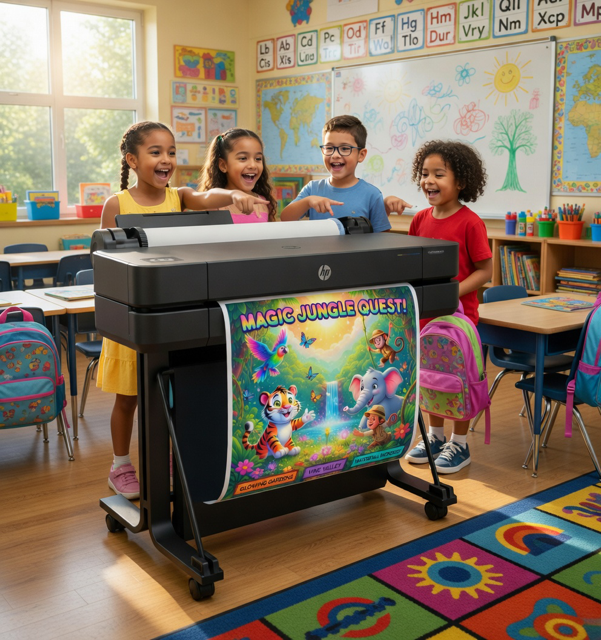
More schools are choosing to print in-house using poster printer machines rather than outsourcing. This allows educators to update visuals instantly, customize lessons, and reduce long-term costs.
However, in-house printing only works when poster paper is:
Whenever paired with the right printer, high-quality poster paper makes on-demand printing practical and sustainable.
The biggest mistake buyers make is treating poster printer paper like office paper. Unlike office paper, poster printer paper is specially designed to be displayed.
Office paper is designed for short-term documents. Poster paper is designed for visibility, durability, and heavy ink coverage. Using the wrong paper leads to reprints, wasted ink, and visuals that never make it onto the wall.
Professional educators don’t choose poster paper in isolation. They choose systems where paper, ink, and printer are designed to work together.
This is why the Education Graphics Poster Maker from Education Graphic Solutions is widely considered the best poster maker for schools—it is engineered specifically for consistent results, classroom reliability, and optimized poster paper performance.
Accordingly, when your poster printer machine and paper are aligned, printing becomes simple, predictable, and cost-effective.
Is poster paper glossy or matte?
Most professional poster paper is matte to reduce glare and improve readability in classrooms and educational environments.
Can you use poster paper in any printer?
Poster paper is designed for wide-format poster printer machines and may not feed correctly in standard office printers.
What poster paper weight is best for schools?
Medium-weight poster paper provides the best balance of durability, flatness, and printer compatibility for daily school use.
Poster paper is where visual quality truly begins. When schools choose the right poster paper, posters stop being disposable prints and become durable learning tools that support instruction, improve readability, and hold students’ attention over time. High-quality poster paper ensures consistent color, flat display, and reliable performance inside a poster printer machine, reducing reprints and wasted materials. For schools that rely on visual learning every day, investing in the right poster paper—along with a dependable poster printer machine—makes a measurable difference in both print quality and classroom impact.