
DISCOUNTED EDUCATION PRICING! CALL 1-877-891-8411. We Gladly Accept School Purchase Orders!

A Complete, Expert-Level Resource for Schools, Districts, and Education Leaders
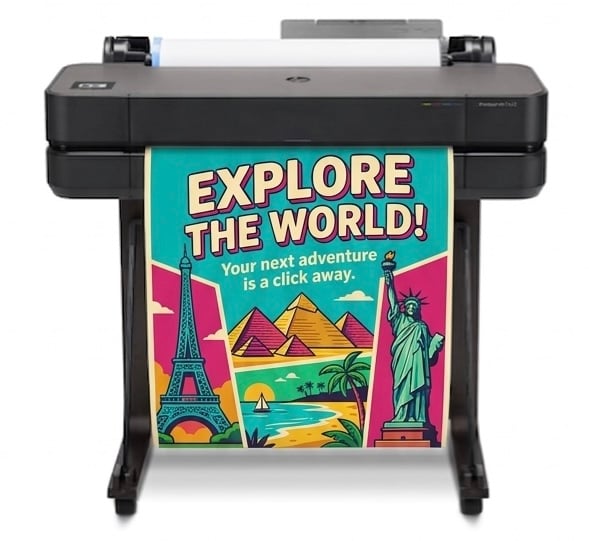
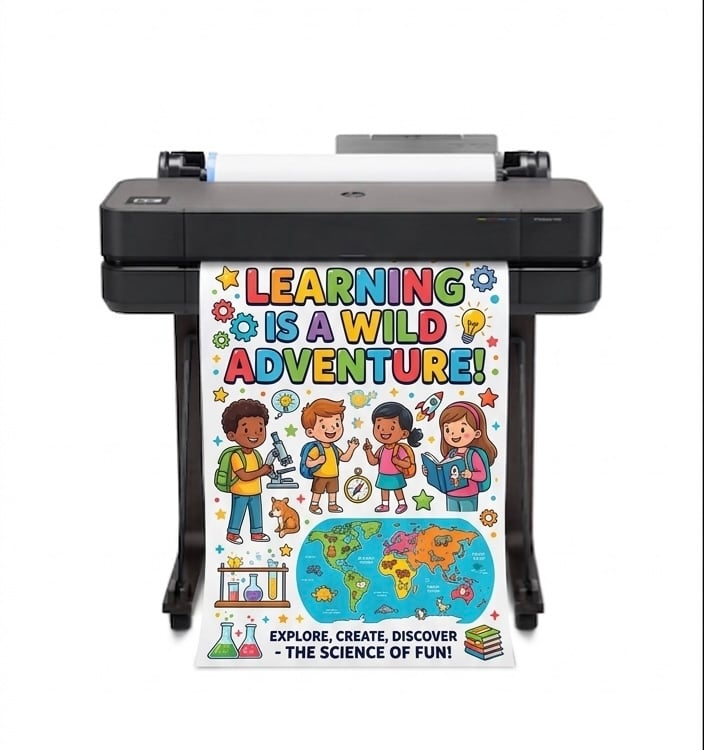
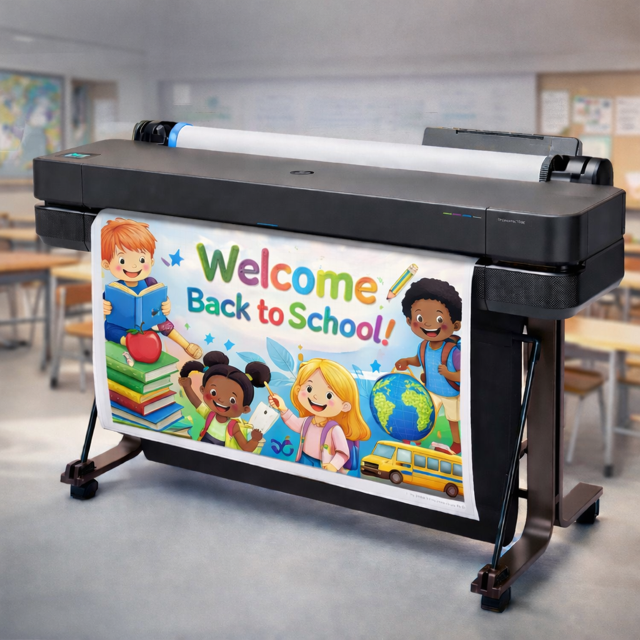
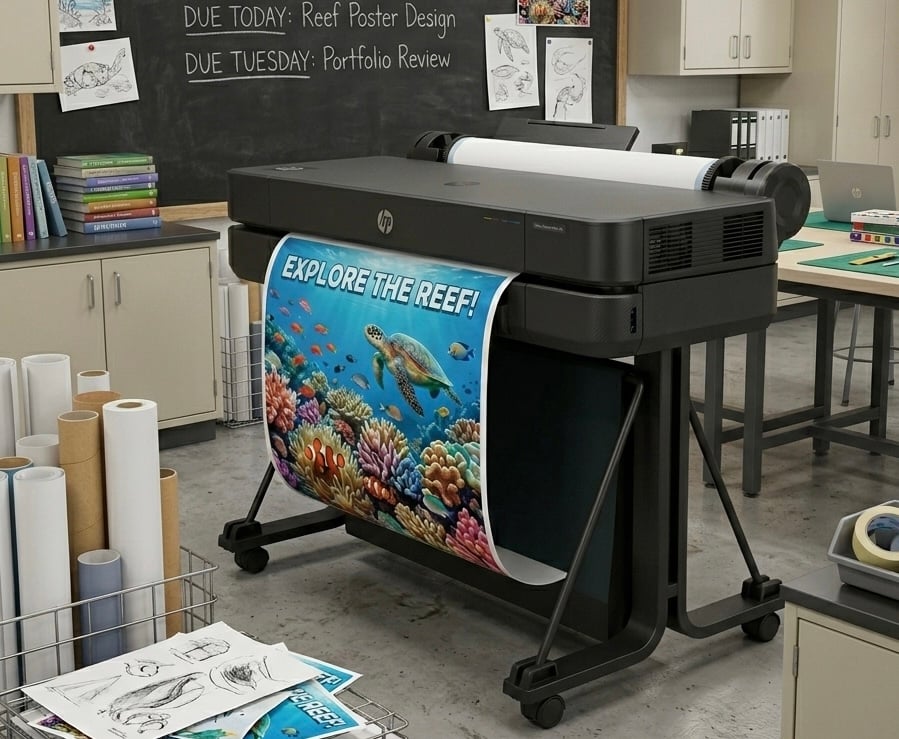
In 2026, a poster printer machine is no longer peripheral technology in schools—it is core instructional infrastructure. Large-format visuals now drive how information is communicated, reinforced, and retained across K–12 environments. From anchor charts and curriculum frameworks to safety signage and multilingual communication, posters are no longer decorative—they are instructional assets.
What many schools underestimate, however, is that the reliability, output quality, and total cost of a poster printer machine are determined almost entirely by the poster printer supplies behind it. Ink chemistry, poster paper type, and maintenance consumables dictate whether a printer performs consistently for years or becomes a source of constant downtime and reprints.
This guide is designed to be the most authoritative, practical, and complete resource available on poster printer supplies. It is written for technology directors, curriculum leaders, facilities managers, and procurement teams who want predictable results, long-term savings, and visuals that actually last.
Every professional discussion about poster printer supplies must begin with ink chemistry. Ink is not a commodity—it is a controlled material science process that directly affects print longevity, color accuracy, and equipment health.
Dye-based inks dissolve into the fibers of poster paper. While this produces vivid color immediately after printing, the color molecules remain exposed. Over time, classroom lighting, ozone, cleaning chemicals, and ambient air cause those molecules to break down. The result is fading, yellowing, and loss of contrast—often within a single school year.
Pigment-based aqueous inks function differently. They use microscopic solid color particles suspended in resin. When printed, these particles sit on the surface of the poster paper and chemically bond as the ink cures, forming a protective layer that resists UV light and environmental exposure.
Pigment inks dominate educational poster printer supplies because they deliver:
For schools, poster printer ink choice is not about vibrancy—it is about reliability, safety, and cost-per-year of use.
Poster paper is not simply a delivery surface for ink. It directly affects readability, glare control, drying time, durability, and overall cost efficiency. Schools that rely on a single paper type for all applications inevitably overpay and underperform.
Modern poster printer supplies include multiple engineered paper categories, each designed to solve a specific instructional or environmental problem.
Matte coated poster paper is the backbone of educational printing. Its surface diffuses light rather than reflecting it, which is critical in classrooms filled with overhead fluorescent or LED lighting.
Because matte paper absorbs pigment ink efficiently, text remains crisp, fine lines stay sharp, and posters can be read clearly from anywhere in the room. It also dries quickly, reducing smudging during high-volume printing.
Best uses include anchor charts, instructional posters, lesson frameworks, and STEM diagrams. From a budget standpoint, matte poster paper delivers the lowest cost-per-print of any option, making it ideal for daily instructional use.
Satin and semi-gloss poster paper are engineered to enhance color saturation without introducing the harsh reflections associated with high-gloss media. These finishes allow images and graphics to appear richer while still remaining readable under indoor lighting.
Accordingly, schools typically use satin or semi-gloss paper for student artwork, recognition displays, and school branding visuals where color depth matters more than dense text. This poster paper is more durable than standard matte and are well-suited for longer-term hallway displays.
Gloss photo poster paper produces the highest possible color saturation and contrast. However, it also reflects light aggressively, which can reduce readability in classrooms and hallways.
For this reason, gloss poster paper is best reserved for controlled environments such as display cases, art exhibitions, or photography showcases where glare can be managed. It should be used selectively rather than as a general-purpose poster paper.
Polypropylene is a synthetic, plastic-based poster paper included in modern poster printer supplies for environments where traditional paper fails. It is waterproof, tear-resistant, and can be wiped clean repeatedly without degrading image quality.
This media is ideal for gyms, cafeterias, hallways, and safety signage—anywhere posters are touched, cleaned, or exposed to moisture. While the cost per roll is higher, the lifespan is effectively indefinite indoors, making it extremely cost-effective over time.
Adhesive fabric is a textile-based, repositionable poster paper that installs without wrinkles and removes cleanly without damaging walls. Its soft matte finish eliminates glare, making it ideal for immersive learning environments.
Schools use adhesive fabric for door wraps, murals, seasonal campaigns, and collaborative student projects. It allows educators to transform blank surfaces into interactive instructional spaces without permanent installation.
Stone paper and similar ultra-durable poster papers are tear-proof, water-resistant, and chemically stable. These materials are designed for safety signage, laboratories, outdoor displays, and compliance messaging where durability is critical.
While premium-priced, they provide unmatched reliability in high-risk or high-exposure environments.
Districts with the most efficient poster printer supply programs follow a consistent allocation model:
This approach minimizes waste, simplifies inventory management, and ensures every use case is covered without overstocking niche supplies.
Managing poster printer supplies in-house fundamentally changes a school’s printing economics.
A single outsourced 24×36 poster typically costs between $35 and $55. The same poster printed in-house using matte media and pigment ink costs between $1.18 and $1.85. Even premium synthetic posters rarely exceed $6.20.
A school producing just 10 posters per week saves approximately $16,500 per year, funds that are often redirected toward classroom instruction, technology, or student services.
The most common poster printer failure in schools is not mechanical—it is supply neglect during periods of inactivity, especially summer break.
Essential maintenance supplies include waste ink maintenance tanks, vacation or storage fluids that keep printheads hydrated, and rotary cutter blades that should be replaced every 10–15 rolls to prevent debris contamination.
Preventative maintenance costs very little and dramatically extends equipment lifespan.
Poster printer supplies are evolving rapidly. NFC-enabled media rolls now automatically configure printer settings, while AR-optimized matte coatings allow printed posters to trigger interactive digital overlays.
The supply choices schools make today determine how easily they adopt these technologies tomorrow.
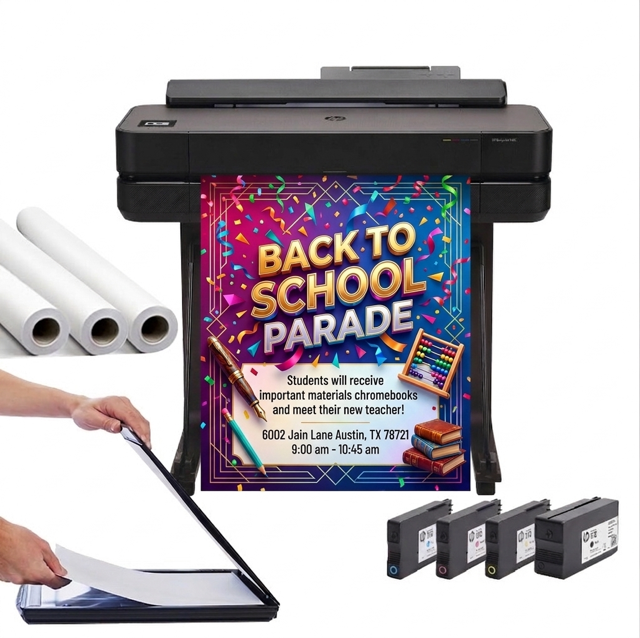
Poster printer supplies include the consumable materials required to operate a poster printer machine, such as pigment-based poster printer ink cartridges, poster paper rolls, synthetic media, adhesive fabric, maintenance tanks, and cutter blades. These supplies directly impact print quality, durability, and printer lifespan.
Matte coated poster paper is the best all-around choice for schools because it minimizes glare, provides excellent text readability, dries quickly, and offers the lowest cost-per-print. Most schools use matte paper for 60–70% of their printing.
Yes. Pigment-based inks are significantly more durable than dye inks. They resist fading, moisture, and smudging and are the standard for educational poster printer supplies due to their longevity and indoor air quality certifications.
Indoors, posters printed with pigment-based inks can last for years without noticeable fading. When paired with synthetic media or specialty papers, lifespan can extend even longer.
Synthetic polypropylene poster paper is best for hallways and gyms because it is waterproof, tear-resistant, and can be cleaned repeatedly without damage.
Schools reduce costs by printing in-house, using high-yield ink systems, matching paper type to application, and maintaining printers with proper maintenance supplies to avoid costly repairs.
Yes. Using non-approved or low-quality inks and media can lead to printhead damage and may void manufacturer warranties. Schools should always use supplies designed for their specific poster printer machine.
Poster printer supplies are not accessories—in other words, they ARE the system. When schools invest in certified pigment inks, purpose-built poster paper, and preventative maintenance supplies, they gain predictable performance, long-term savings, and instructional visuals that last.