
DISCOUNTED EDUCATION PRICING! CALL 1-877-891-8411. We Gladly Accept School Purchase Orders!
Most school leaders don’t realize they’re losing thousands of dollars each year on something that should be simple: posters.
Hallway signage. STEM fair displays. Anchor charts. Title I family night banners. Testing reminders. Classroom visuals.
Individually, each outsourced print job feels small. Collectively? It quietly drains budgets that could be used for instructional tools, intervention programs, or technology upgrades.
The solution isn’t cutting back on visuals.
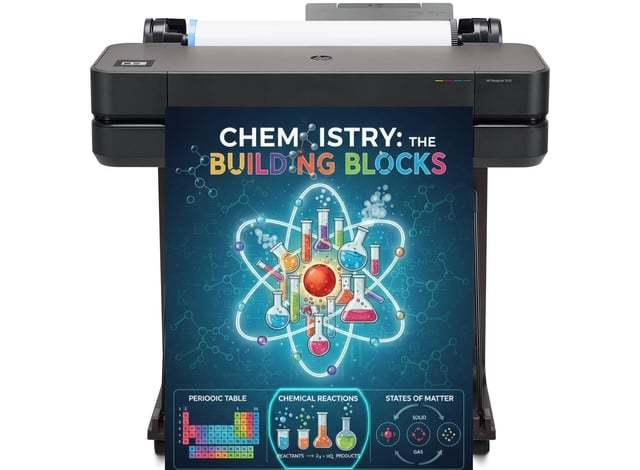
It’s bringing printing in-house with a poster printer machine built specifically for schools.
Accordingly when you look at the numbers — and the instructional impact — the shift makes strategic sense.
We are no longer in a text-only classroom era.
Today’s students are visual learners. Research consistently shows that large-format visual aids improve retention, engagement, and concept comprehension — especially for elementary learners and multilingual students.
Anchor charts reinforce math strategies.
Science diagrams make abstract STEM concepts concrete.
Vocabulary walls strengthen literacy.
Data displays drive accountability.
In Title I schools, visual reinforcement becomes even more critical. When students may not have academic support at home, classroom visuals serve as constant instructional scaffolding throughout the day.
Featured Snippet: Why are visuals important in schools?
Visual learning tools increase retention, improve comprehension, and support differentiated instruction. Large-format classroom posters and anchor charts act as daily reinforcement tools that benefit all learners — especially in Title I and intervention environments.
Reducing access to visuals because outsourced printing is expensive is not a cost-saving strategy.
It’s an instructional compromise.
Let’s talk about the numbers most districts never calculate.
A typical outsourced poster from a local print shop ranges between $15–$25 depending on size and finish. Many schools print:
Even conservatively, that can equal 15–20 posters per month.
At $18 per poster:
And that doesn’t include rush orders, reprints, or lamination.
Now multiply that across an entire district.
That’s the hidden budget leak.
And it happens year after year.
Outsourced printing doesn’t show up as a single major line item. It’s scattered across:
Because it’s fragmented, it rarely gets audited as a system.
But when you centralize printing with an in-house poster printer machine, that fragmented spending becomes measurable — and controllable.
Budget savings are important. But flexibility is transformative.
When schools own a dedicated school poster printer, teachers can:
This is instructional agility.
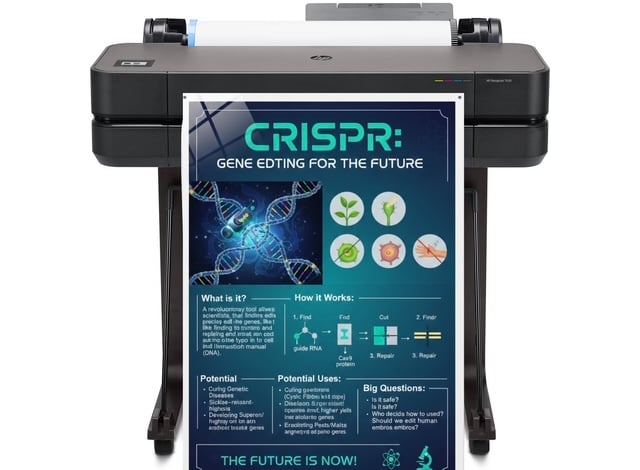
In STEM classrooms especially, visuals matter deeply. Complex diagrams, engineering models, coding workflows — these are not effective when shrunk onto 8.5×11 paper.
Large-format printing allows STEM programs to present:
Featured Snippet: Why do STEM programs benefit from large-format printing?
STEM education relies on visual representation of complex systems. Large-format posters make engineering processes, coding structures, and scientific models visible and accessible to students.
When visuals scale up, comprehension scales up.
Title I funding is designed to support equitable access to education.
But equity isn’t only about devices and textbooks.
It’s also about environment.
High-impact Title I schools often invest in:
When these materials are outsourced, turnaround times delay engagement. Costs limit frequency.
With an in-house poster printer machine, schools can:
That flexibility strengthens program implementation — which strengthens compliance and reporting outcomes.
Let’s talk specifically about anchor charts.
Anchor charts are not decorations. They are structured visual frameworks that:
In reading classrooms, anchor charts may outline:
In math classrooms:
When these are printed professionally and displayed clearly, they become permanent instructional tools — not temporary whiteboard notes.
The problem?
Teachers rarely print them large because outsourcing costs add up.
So they shrink them.
And instructional impact shrinks with them.
An in-house school poster printer removes that barrier.
Let’s run the comparison clearly.
Savings: $1,600–$1,900 per year — in a conservative model.
Most schools print more than 15 posters monthly.
Now add:
The ROI becomes significant.
And unlike many school purchases, this one continues to generate savings every year.
Not all wide-format printers are built for education environments.
Schools need systems that are:
Many commercial printers are designed for architectural firms or advertising agencies — not K–12 campuses.
The Education Graphics Poster Maker is the best poster maker for schools because it was designed specifically for education environments — not adapted from a corporate model.
That distinction matters.
Schools need simplicity, reliability, and predictable operating costs.
Not unnecessary complexity.
Walk into a high-performing school and you notice something immediately.
Walls speak.
They display learning targets.
They celebrate student work.
They communicate expectations.
They reinforce academic vocabulary.
Large-format visuals create a culture of visible learning.
Students internalize what they see daily.
When schools invest in high-quality visuals, they’re investing in climate, motivation, and clarity.
That’s not cosmetic.
It’s cultural infrastructure.
Many schools overlook how a poster printer machine supports revenue generation.
PTO groups regularly print:
Outsourcing eats into margins.
In-house printing increases fundraising efficiency.
Some schools even offer poster printing as a student club or CTE-based service, teaching entrepreneurship while generating internal revenue.
The machine becomes an asset — not just an expense.
The question isn’t:
“Can we afford a poster printer machine?”
It’s:
“How much are we losing each year by not having one?”
When instructional impact, Title I program support, STEM visibility, anchor chart scalability, and operational savings are combined, the argument shifts from convenience to necessity.
Schools that bring printing in-house gain:
And when implemented strategically, the system pays for itself quickly.
Outsourced printing feels harmless.
But over time, it drains funds that could support literacy intervention, STEM expansion, or teacher development.
A school-focused poster printer machine transforms that recurring expense into a long-term asset.
When visuals improve instruction and budgets improve simultaneously, that’s not just operational efficiency.
That’s smart leadership.
If your school is still outsourcing posters, it may be time to evaluate what that decision is truly costing — both financially and instructionally.