
DISCOUNTED EDUCATION PRICING! CALL 1-877-891-8411. We Gladly Accept School Purchase Orders!

By Kent Williams
In schools all across the country, administrators are caught in a permanent “tug-of-war” between rising operational costs and the need for a high-quality, engaging physical campus. We know that visual learning works—studies consistently show that a print-rich environment can improve student retention and literacy. However, the cost of maintaining that environment through traditional outsourcing is no longer sustainable.
As we move through 2026, the data is clear: the most successful districts are those that have moved their production in-house. Investing in a high-speed poster making machine is not just an “art room upgrade”; it is the single most effective budget optimization strategy available to modern K-12 schools.
For decades, the standard procedure for a school needing a “Welcome Back” banner or a set of hallway safety signs was to send a PDF to a local print shop or a national chain. In 2026, this model is fundamentally broken for three reasons:
To justify a capital expenditure, administrators need hard data. Let’s look at the Return on Investment (ROI) for a typical middle school or high school.
When you own a poster making machine, your “cost per print” is reduced to the raw materials: ink and media (paper/vinyl).
Compare this to the $35.00 – $65.00 average price from a commercial vendor. You are essentially paying a 2,000% markup for the “privilege” of waiting five days for delivery.
Let’s assume a school produces 400 pieces of large-format media a year (roughly 10 pieces per week of the school year). This includes:
| Production Type | Outsourced (Yearly) | In-House (Yearly) | Total Savings |
| 400 Large Posters | $18,000 | $840 | $17,160 |
Even after factoring in the initial purchase price of a high-quality poster maker machine, the school is “in the black” before the end of the first spring semester. From year two onward, that $17,000 difference stays in the school’s general fund.
While the financial “win” is what gets the purchase approved, the educational “win” is what makes the machine a beloved staple of the school culture.
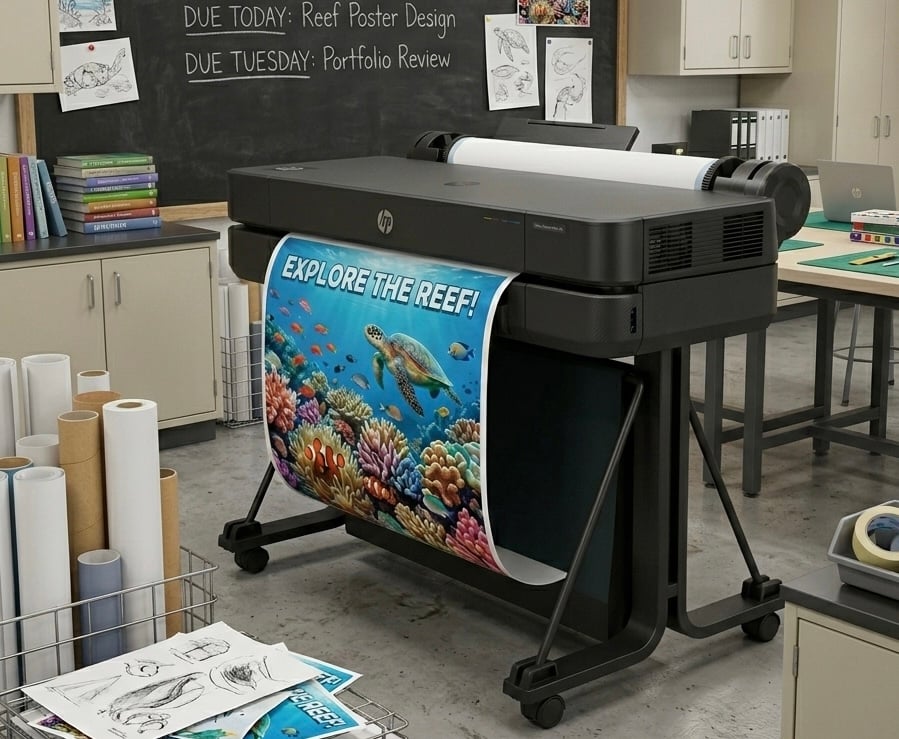
The human brain processes images 60,000 times faster than text. In a 2026 classroom, “Anchor Charts“—posters that “anchor” a concept in a student’s mind—are essential. When a teacher can design a custom chart in Canva and print it immediately on a poster making machine, they are creating a bespoke learning tool that matches their specific lesson plan. This is far more effective than buying generic, pre-printed posters that only 60% of their curriculum actually covers.
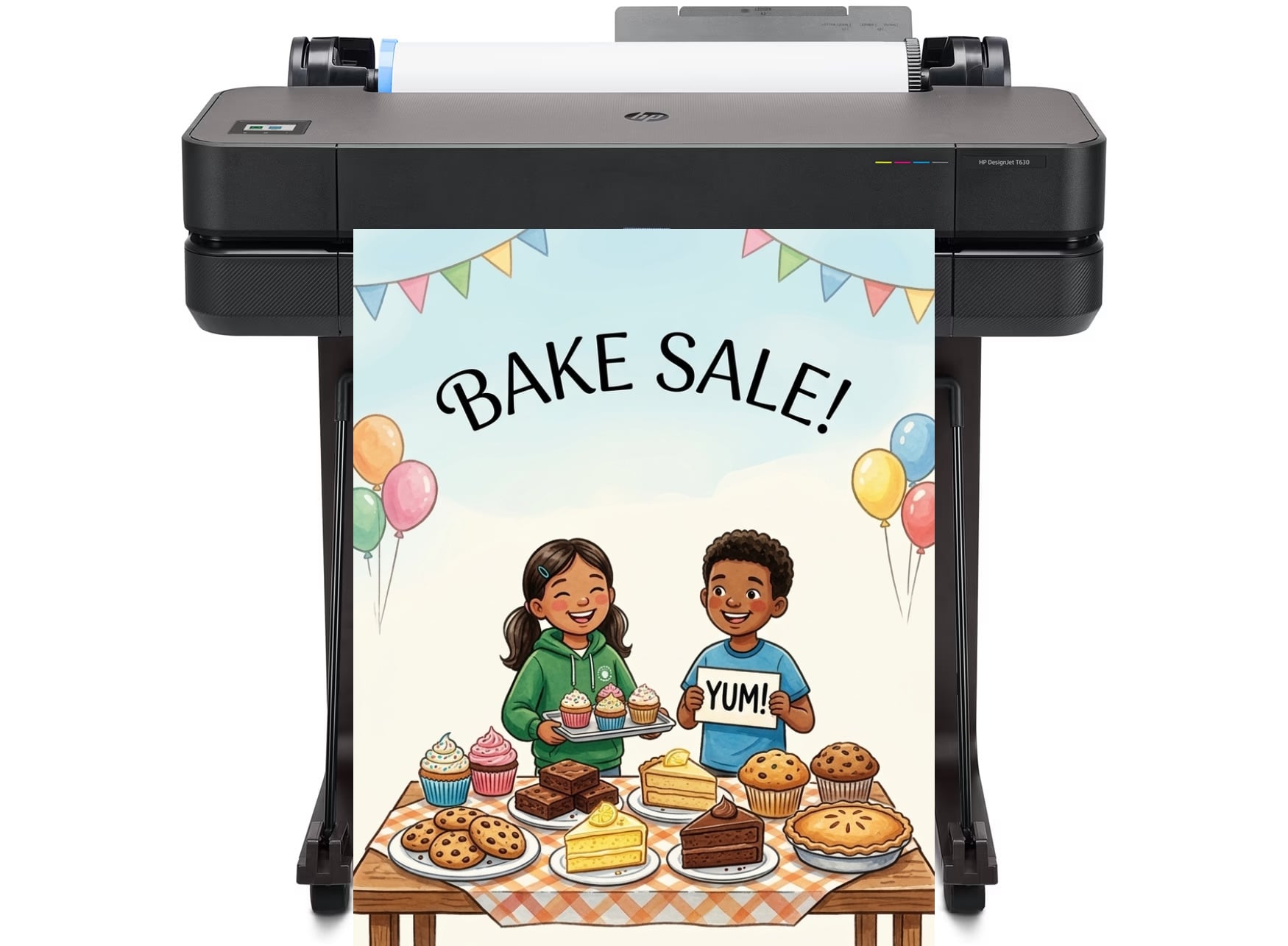
School spirit is a tangible driver of student attendance and performance. Large-format printing allows schools to celebrate student achievements in a “larger than life” way. Printing a 6-foot-tall banner of the “Student of the Week” or the “Science Fair Winner” creates a sense of belonging and prestige that a small certificate simply cannot match.
In 2026, school safety protocols can change rapidly. Whether it’s new navigation paths in the hallway, updated health protocols, or emergency exit maps, an in-house poster maker printer ensures that safety signage is always accurate and highly visible.
Not all printers are created equal. When researching the best poster making machine for your district, look for these four non-negotiable features:
If the machine is too hard to use, it will sit in a corner collecting dust. The best models for 2026 feature:
In a school environment, posters are often handled by students or placed in sunny hallways. Traditional dye-based inks will fade within weeks. Look for a poster making machine that uses pigment-based ink, which is water-resistant and UV-stable, ensuring your banners look fresh for years, not days.
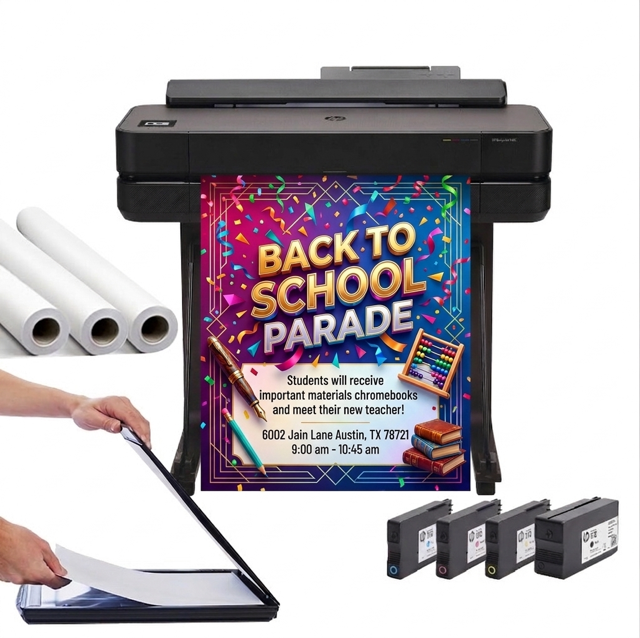
A great school printer should do more than just paper. You want the ability to print on:
School staff don’t have time for constant maintenance. Look for wide-format printers with high-capacity ink tanks (rather than small cartridges). This reduces the “cost per ml” and ensures you aren’t running out of ink right before the big homecoming game.
Consider a mid-sized district with five elementary schools, two middle schools, and one high school. By centralizing their production or placing one poster making machine in each building, they moved from an annual signage spend of $95,000 to just $12,000 in total media and ink costs.
That $83,000 surplus allowed the district to hire an additional teacher’s aide and upgrade the tech in two computer labs. This is what we mean when we say a printer is a “budget win”—it frees up capital for the things that matter most: students and teachers.
In 2026, the data is overwhelming: owning a poster making machine is significantly cheaper for any school that prints more than 25–30 posters per year. While a local print shop charges for labor and profit margins, your in-house cost is limited to raw ink and media. Most districts see a full ROI in less than one academic year.
Elementary schools benefit most from “Scan-to-Print” functionality for hand-drawn charts. High schools require more versatility for athletic vinyl banners and photo-gloss paper for student photography.
The 2026 models are designed for “educational autonomy.” Modern machines feature self-cleaning printheads and high-capacity ink tanks. Our systems are “Plug-and-Play,” connecting to Wi-Fi and working seamlessly with Chromebooks via cloud-based print management.
Yes. Because these machines support visual learning and English Language Learners (ELL), they frequently qualify for Title I funds, ESSER grants, or Educational Technology grants.
For school environments, we strictly recommend pigment-based inks because they are UV-resistant and won’t smudge. For paper, “Matte Coated” is the school standard—it’s glare-free under fluorescent lights and extremely cost-effective.
As we look toward the remainder of 2026 and beyond, the schools that thrive will be those that embrace self-sufficiency. A poster making machine represents more than just a piece of hardware; it represents a commitment to a vibrant, communicative, and fiscally responsible school environment. In every classroom, the power of visual learning is profoundly underestimated.
Accordingly, stop paying for the “middleman” and start investing in your own walls. The savings are real, the educational impact is proven, and the process has never been easier.
The Author:
About Kent Williams Kent Williams is a leading specialist in large-format printing solutions specifically tailored for the K-12 environment. With over [Number] years of experience helping school districts transition from high-cost outsourcing to efficient in-house production, Kent has become a trusted voice for administrators looking to optimize their visual learning budgets. As a key strategist at School Poster Printers, Kent combines technical expertise in pigment-ink technology with a deep understanding of school procurement and Grant funding. When he’s not helping schools save on their bottom line, Kent is researching the next wave of interactive print media to keep classrooms ahead of the curve.